Tuesday, July 25, 2017

West Texas Milky Way

When's the last time you saw the Milky Way? I mean really saw it in all its splendor under the night sky, not just a ghost of it from the suburbs or a picture of it?

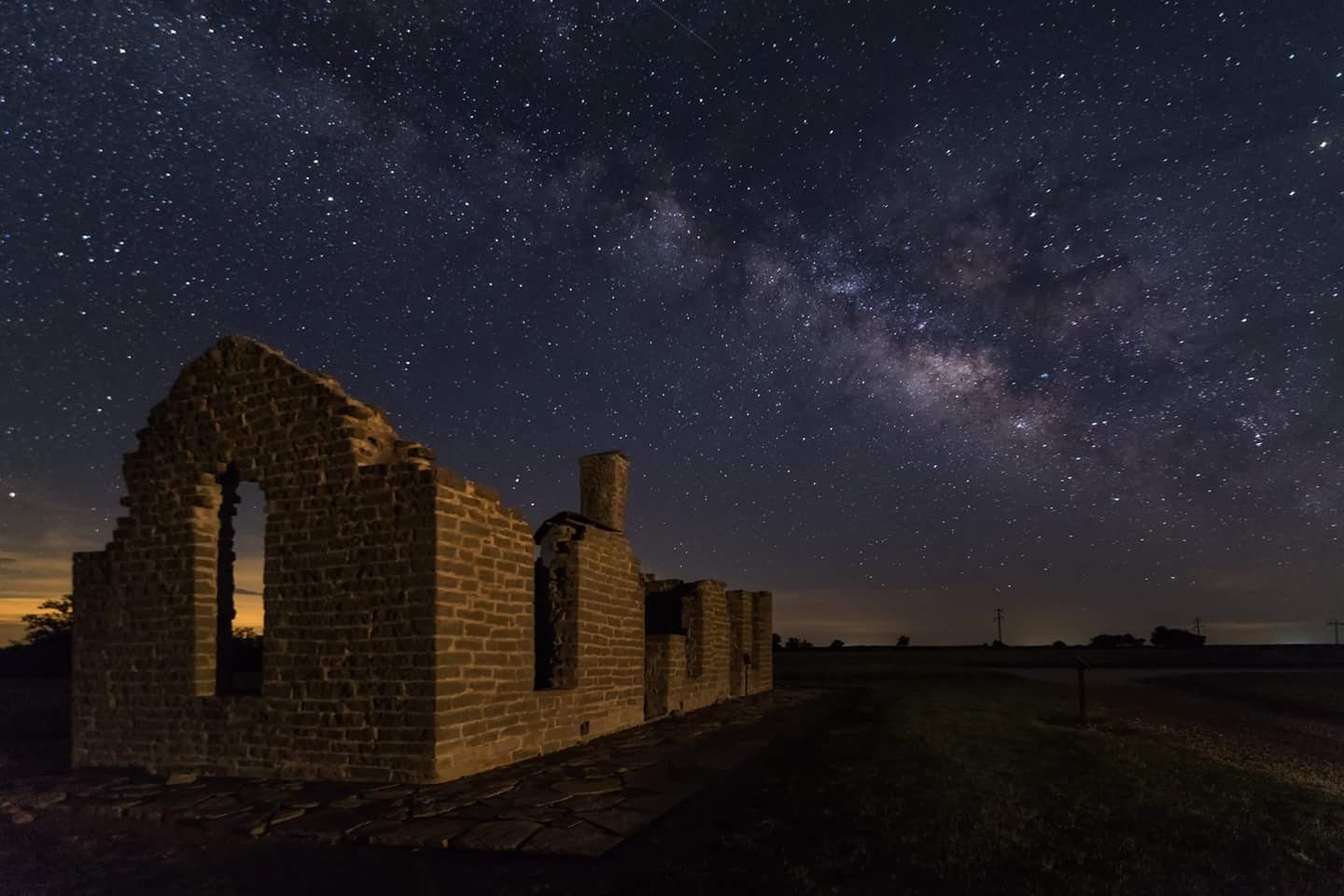
Recently, my son Brian and I trekked from Dallas out to the near edge of West Texas to the Fort Griffin State Historical Site. We braved black widows, skunks, swarms of mosquitos, way-too-close pack of coyotes and other things lurking in the dark we're just as happy to have not known were there, all to capture the beauty of the summer night sky.

We are pretty happy with the results. They aren't great - we made plenty of mistakes - but I think it's a good start. We're looking forward to shooting some place like this again. Perhaps from the even darker skies of Big Bend next year.

One thing you may notice about the last shot is why, under pitch dark skies, are the ruins lit? We were practicing a technique called low level landscape lighting. It's similar to another night photography technique called light painting but we both think it makes for a more pleasing view, allowing us to add a foreground element without it dominating the shot.

Enjoy and clear skies!


A view of the site from visitor center while we wait for the sun to set. 

A daylight view of the ruins we shot. 

One of Brian's shots of the site with thunderheads rising far to the north over Wichita Falls.
Photo edits by Brian Eaton 

A silhouette of the ruins and the Milky Way Brian shot with our Nikon D7000.
Photo edits by Brian Eaton

One of my better shots of the ruins and Milky Way shot with our new Nikon D750.
Photo edits by Brian Eaton

Sunday, July 2, 2017

Seeking Artist for Blog Title Image


For awhile now, I have had an idea for a new image for this blog. The challenge is that although I have a little bit of artistic skill, this will be beyond what I can do on my own so I am seeking an artist interested in developing it.

I'm checking with friends for help in finding someone to work on this but to simplify sharing a description of the project, I am posting it here. Regardless of how you heard about it, if you have an interest in helping with this project, please post a reply.

Project Description

Title Image for Wind And Sky, a blog on my personal interests.

Primary theme: astronomy, science
Secondary theme: sailing, wind, weather
Across both themes: photography

Idea:
  • Long run GIF (10-20 seconds)
  • Have end of animation transition into beginning, making the change seamless
  • Images:
    • Day time, water foreground, sailboat (heeling over) at left with Sun above
    • Day time image repeating with Sun and sailboat moving left to right
    • Evening twilight, sailboat disappearing off horizon as Sun sets and Moon rises
    • Night time with stars, Milky Way stretching across, Moon at left
    • Night time image repeating with Moon, stars and Milky Way moving left to right
    • Morning twilight, sailboat appearing over horizon with Sun rising and Moon setting
  • Image dimensions (alternative is in case necessary to make image layout, transitions fit smoothly):
    800px by 150px
     Or
    800px by 200px
  • Title text (to be layered over image, already included in blog design)
    WIND & SKY
    REFLECTIONS ON SAILING, ASTRONOMY AND PHOTOGRAPHY.
  • Color formatting:
    • Should fit, not clash, with blog background color: #000033
    • Title text is white so shouldn’t disappear into the image
    • Image background transition from a dark sky blue in daytime through purplish twilight to black night and back
  • Image content and sequence should be reasonably scientifically accurate (no having Sun or Moon move wrong direction, Milky Way movement being unnatural, etc.)
  • If animation and transitions problematic:
    • Non-repeating GIF, i.e., start at middle of night image, run full animation back to that point and end without repeating
      - or -
    • Instead of GIF, do image where it’s daylight with sailboat on left transitioning through twilight to night with Milky Way on right
  • Optional:
    • Possibly revise blog layout theme, making text (and title image) wider
    • Meteor across night sky

Animation examples:


Sunday, June 25, 2017

2017 Total Solar Eclipse - First to Cross Mainland USA Since 1979


It may seem hard to believe but solar eclipses are technically fairly common, at least one a year, many times two in a year. What makes them seem rare though has to do with the relatively small portion of the Earth over which they pass; for any given spot on the globe, solar eclipses are rare. For example, there hasn't been a solar eclipse crossing America since 1991, hasn't been one crossing any part of the contiguous United States since 1979 and there hasn't been a solar eclipse cross the entire continent since 1918.

On August 21st of this year, all three of those dates reset: a solar eclipse will cross from Oregon to South Carolina. Anyone along the centerline of the track will get to observe (weather permitting) the glory of a total eclipse. Everyone else in the country will see a partial eclipse (less of one the further from the centerline you are).

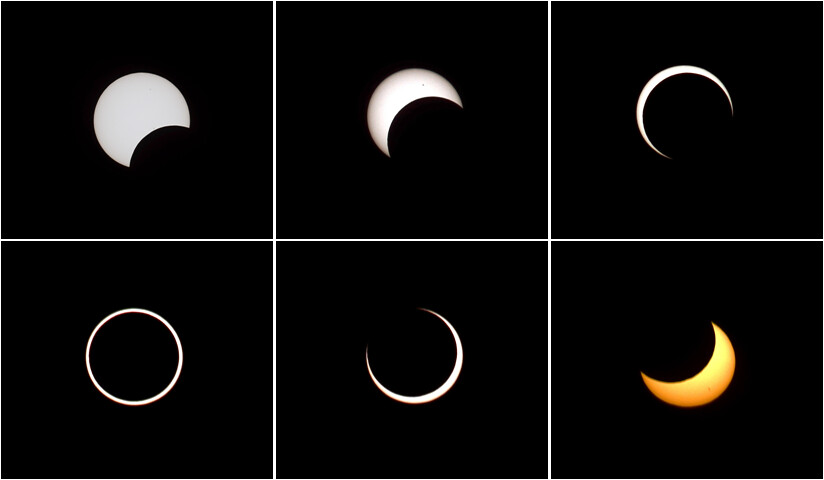
The last time I saw a solar eclipse was an annular eclipse in 2012 viewed from Albuquerque, New Mexico. The image included here is from my post on that event. For the 2017 total eclipse, I'm planning to observe from the centerline. More on that in future posts. In the meantime, here are a few links for more information on the event.

NASA 2017 Eclipse Site
Eclipse.org Site
Alan Dyer's Tips for the Solar Eclipse