Updated January 6, 2025 (new content).
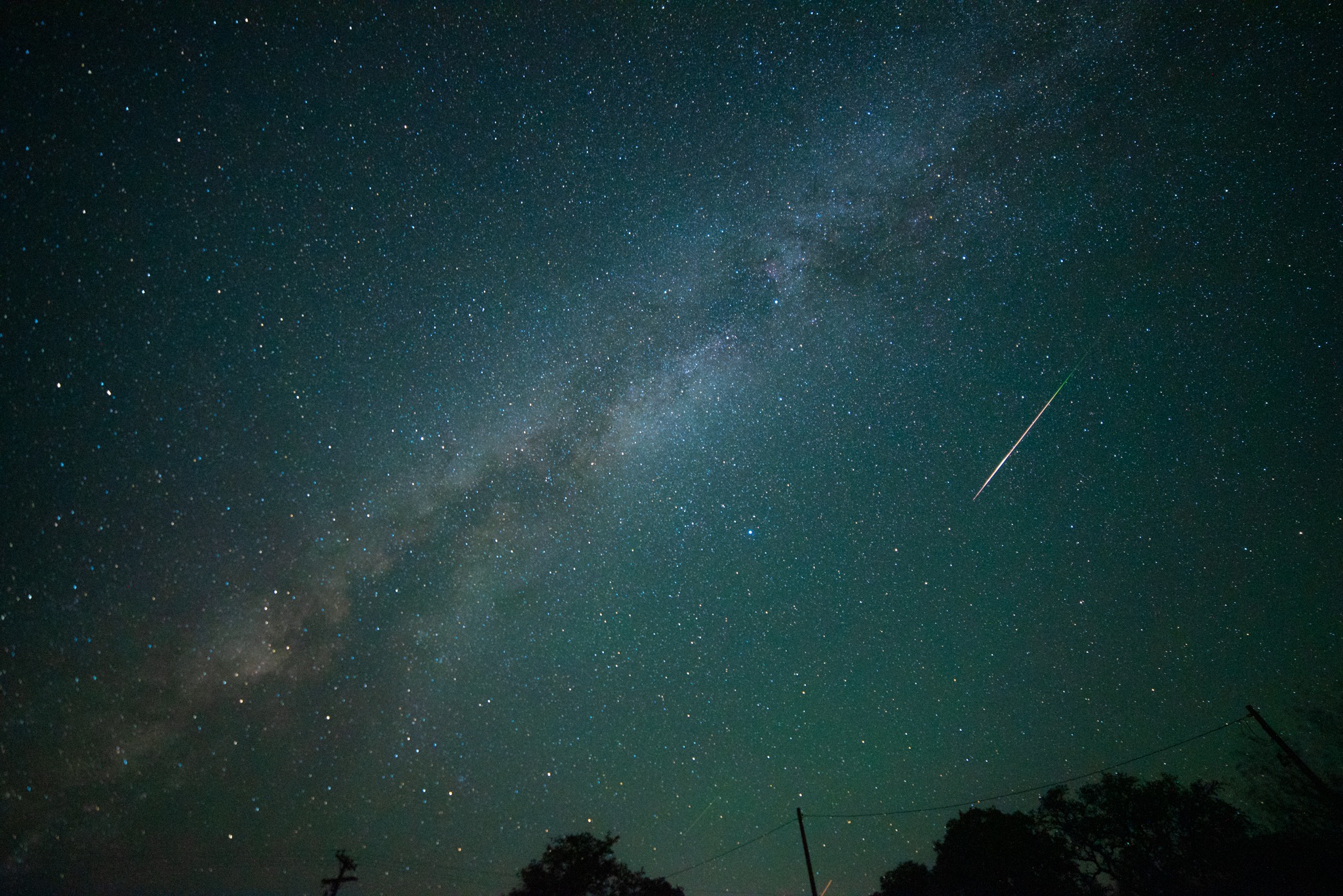
Long exposure night sky photography can capture the beauty of the cosmos, whether it depict stars, solar system
objects, the Milky Way or deep sky objects such as galaxies and nebulae. Sometimes though, such images include
streaks of light that were unexpected. In some cases, we’ve luckily captured a speck of dust streaking through
Earth’s upper atmosphere, glowing as it burns up, what we know as meteors. But often that streak across the photo is
something else. For example, what about this one?
 |
| Photo by Nathan Eaton |
Well, this one is more of a smudge than a streak. A shot of Comet NeoWise (C/2020 F3), it's not likely to be mistaken for a meteor but I'm sharing it both because comets do trace a path across our night sky images but also as I was up at 5:00 a.m. this morning, out by the lake trying to capture a shot of Comet Nishimura (C/2023 P1) just as I am sure so many other people were. Also, of all the things I could think of that leave streaks of light across night sky images, comets seemed at least worth a mention. I'll leave
UAPs for someone else to cover. 👽
Anyway, below I’ll share examples of other types of objects that may show up in night sky images and ways to tell when you’re seeing them.
First, a distinction to make. My focus here is on things that appear in night sky images taken with exposures at
least a few seconds long. Obviously, when viewing the night sky directly, if you see a streak of light across the
sky it’s typically going to be a meteor while the other objects I’ll discuss would appear to the eye as a relatively slowly
moving point (or points) of light. It’s when these things are photographed over the length of seconds or minutes that
they appear as a streak of light.
Meteors
Although many streaks of light on long exposure images are taken for a meteor at first glance, there are a
few key characteristics that can help confirm if that’s what you’re looking at. Generally, meteors in photographs (individually or from a meteor shower) usually:
Of course there are exceptions. You might find that a streak that otherwise appears to meet the characteristics listed above for a meteor but has a blunt
end. In this case, your exposure may have started or ended during a meteor mid-flight. Another possibility is when the meteor is a bolide or a fireball. In this case, the streak will grow much larger and brighter at one end. It may also last long enough to appear in more than one frame of a sequence.
Aircraft
 |
Stack of 8 second exposures capturing DFW-area
aircraft
Photo by Nathan Eaton |
Of all the things that might be mistaken for a meteor in a night sky photo, aircraft are usually the
easiest to exclude. We have a number of things going for us in identifying when that streak of light is an aircraft:
- they most often have multiple lights
so on close inspection the streak is actually multiple streaks,
- the different lights on aircraft are different colors, usually a combination of white, red and green,
- the navigation lights (red on left wing, green on right) are constantly on so will appear in a long exposure image as
solid streaks,
- the red beacon lights and white anti-collision strobe lights flash at different intervals so they will appear in a long exposure image as a series of dashes or dots,
- if flying at high altitude where you're unable to distinguish separate streaks, there will still be dots as the navigation lights blink on and off in flight,
- in image sequences, an aircraft will appear in multiple, consecutive images (though as in the image above, not always in a consistent direction).
The image above was taken with a wide-angle lens but aircraft (and other objects described here) may also appear in telescopic images which have a much narrower field of view. The image below was taken by photographer Bill Brownlie while imaging the Andromeda Galaxy (M31) with his
Williams Optics GT71. As he reviewed the images, he found that in one the galaxy was photo-bombed by a commercial jet.
 |
| Photo by Bill Brownlie |
The various aircraft lights are clearly visible:
- Green navigation light on the right wingtip
- Red navigation light on the left wingtip
- Red beacon lights on the aircraft's centerline (top and bottom) that flash periodically - in this case the bottom beacon is illuminating the engine cowlings on each wing
- White anti-collision strobes outboard of the navigation lights on each wing, appearing as intermittent white streaks
The position of the red and green navigation lights indicates the jet was flying from left to right across the frame.
Bill shared this image in a private Facebook group,
Astrophotography. If you belong to the group or decide to join it, you can see his original post
here.
Satellites
With the dramatic increase in satellites launched into Earth orbit in recent years (
nearly 38% between early 2022 and
mid-2023), capturing a satellite in a long-exposure photograph of the night sky is becoming more and more
likely. Although they vary in speed, altitude and direction, they often appear as solid streaks of light having a
consistent brightness and color front end to end and the ends appear blunt rather than tapered like a meteor. As with aircraft, in image sequences a satellite will typically appear in multiple, consecutive images (though in a consistent direction).
Satellites show up to us on the ground not because they have their own lights (like aircraft) but because they reflect sunlight. Sometimes, as a satellite passes over, the angle of its reflective surfaces may change, causing a brightening along part of the streak it leaves in your photograph.
Another characteristic of satellites: when they move into or out of the Earth's shadow, they no longer reflect sunlight. Instead of having a blunt end (caused by the abrupt start or end of your exposure), the end may taper. This can happen on either or both ends. Although this may look similar to the tapered ends of a meteor, a satellite trail will typically be longer, appear in multiple frames, and lack the distinctive color associated with meteors.
These days, that brightening is likely to be relatively minor. Prior to 2019, a constellation of 66 Iridium
satellites were still in operation. Having highly reflective surfaces they commonly produced a streak of light in
the sky called an Iridium flare,
visible not just in photos but to viewers on the ground, much like a meteor. Often occurring shortly after sunset,
they were bright enough to be visible even in the twilight sky. Since the last Iridium satellite was decommissioned
in 2019 (burning up in the Earth’s atmosphere), there aren’t any other satellites that produce streaks of light
across the sky quite so brightly.
That said, today there is a new type of satellite that may make a big appearance in your night sky images: Starlink. Although
individual Starlink satellites would appear as any other satellite once on-station 342 miles up, two factors make
Starlink more likely to show up:
- sheer numbers - as of last month, there are over 5000 of them in low Earth orbit (out of a grand total of about
12,000 total satellites in orbit, active or inactive),
- the number launched at once, usually about 20 or so at a time - within the days after a launch and before they
achieve full orbit, all of a group of Starlink satellites launched together are flying in a line, appearing in
the sky as a series of dots, often referred to as a “train”.
The good news is that there are tools that can help identify whether that streak in your photo is a satellite. My
favorite is Stellarium (available as free open source software
for Windows, Mac and Linux or as paid software for iOS, Android and Symbian). By setting the location where
your shot was taken and the date/time of the image in Stellarium, you can zoom in on the area where the streak
appears in your image and increase the time rate then watch for what crosses the same section of the sky. Sometimes
it’s difficult to find what it was but I can usually confirm there was a satellite and which one it was. Another useful tool is Heavens Above.
While those tools are great for looking back in time at when/where a satellite was visible or for looking ahead at when they might be visible, another tool you can try if your goal is finding when you can see a Starlink satellite, give the SpaceX Starlink Satellites Tracker a try. Thanks to Stephen Buck for his comment on the Facebook group Astrophotography for Beginners for that link.
Space Stations
 |
Stack of 8 second exposures of ISS fly-over
Photo by
Nathan Eaton |
For the most part, craft like the
International Space Station (ISS) would appear in a long exposure night sky image as a long streak similar to any other satellite. In the case of the ISS and eventually the
China space station Tiangong, given their large size relative to other satellites they can sometimes appear brighter and result in a wider streak across your photo. Similar to other satellites, as a space station passes overhead it may pass into the Earth’s shadow before reaching the horizon. When this is captured in an image such as the one above, it may appear to fade out, perhaps even with a tapered appearance, rather than the light streak having a blunt end representative of your camera’s shutter closing.
Another similarity space stations have to other satellites is that their orbits are well understood. This makes their
appearance predictable. There are many tools available to forecast these appearances including NASA's Spot the Station. One of my favorites is Heavens Above. With it, you can see when various
satellites and space stations are expected to be visible from your location.
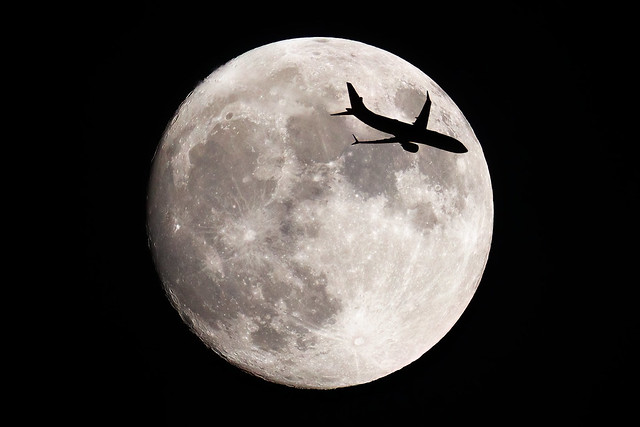
Variation on a Theme: Solar and Lunar Transits
If having the ability to tell where satellites and space stations are in the sky piques your interest
beyond just figuring out what that light streak across your long exposure night sky photo is, if you ever take solar or
lunar photos, then another tool you should check out is
Transit Finder. With it, you can identify when the ISS, the Hubble Space Telescope (HST) and
other large craft in space will fly across the face of the Sun or Moon, giving you a chance to try your hand catching
them in a photograph. Follow the link of the image above for information on what's involved.











 The journey continues beyond 2009... check it out!

