 |
| Want a Zoozve Poster? Click on the image to buy one from Alex |
Right? What the heck are they? A quasi-moon of a planet is an asteroid that remains in the general vicinity of its planet. Unlike a moon, a quasi-moon doesn't orbit the planet itself but orbits the Sun, just with a path similar to that of the planet. If you want to learn more about quasi-moons, check out the Wikipedia quasi-satellite article.
BTW, if you have seen the latest news reports about Earth having a mini-moon for two months as asteroid 2024 PT5 is captured by Earth's gravity, you might wonder about the difference between a mini-moon and a quasi-moon. See the Wikipedia quasi-satellite and temporary satellite articles for the details but basically quasi-moons have a (mostly) stable orbit and mini-moons don't.
The Zoozve Story
I first learned about quasi-moons listening to a viral podcast episode about something called Zoozve. You should check out the Zoozve episode yourself, both for the full story and more details on this unique object, but the gist of it is that the co-host of Radiolab, Latif Nasser, was looking over a solar system poster bought for his son and noticed the name Zoozve, shown as a moon of Venus. Having never heard that Venus has a moon, he did his thing as an investigative reporter and learned that it was a quasi-moon. He also discovered that Alex Foster, the graphic artist who created the poster, had mistakenly shown the object's provisional designation, 2002VE (technically, 2002 VE68) on the poster as ZOOZVE. Latif eventually pitched the idea of submitting the name Zoozve as the official name of 2002 VE68 to Brian Skiff, the scientist who had discovered it. Brian submitted the name to the International Astronomical Union (IAU), the scientific body responsible for governing the names of astronomical objects, and it was eventually approved.
The Naming Contest
 |
| Orbital path for 2004 GU9 Click to enlarge |
Inspired by the naming of Zoozve, Radiolab and the IAU kicked off a contest this past May to name one of Earth's quasi-moons, the asteroid 164207 (2004 GU9), as a way for the public to learn more about quasi-moons and the ways in which the naming process connects culture and science. You can read more about the contest here. There aren't many quasi-moons and only a few have official names, the rest just have a provisional designation, so it is pretty cool for the public to have an opportunity to suggest the name for one.
The deadline for submissions is today so if you weren't already aware of the contest, there are only hours left if you want to make a submission. However, you can still participate as Radiolab and IAU will pick 10 finalists in October and then during November and December the public will be able to vote on which of these they think will be the best name for 2004 GU9. The winning name will be announced in January, 2025.
Getting Involved
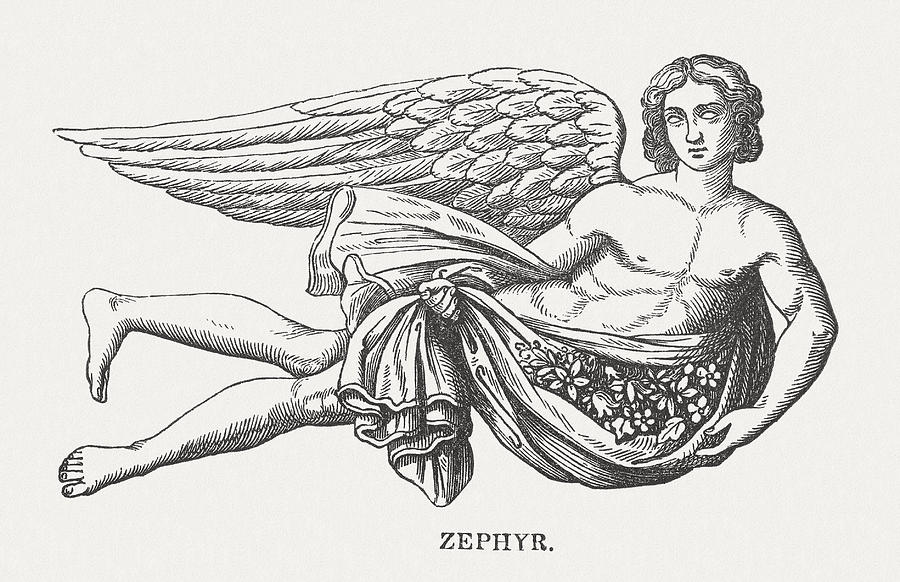
After coming up with the name, I had to draft a citation, the official description that will be recorded with the name, and a justification, my case for why they should choose my submission. Drafting those involved numerous rewrites. In the course of this I did leverage some online resources, even using AI for idea generation and suggestions on improving the writing, but ultimately the end result is my own work. See below for what I submitted.
| Name: | Zephyrus |
| Source: | Greek Mythology |
| Citation: | Zephyrus is the Greek god of the west wind, one of the four Anemoi, the wind gods. He symbolizes renewal, life, and the gentle forces of nature. This name was selected through a contest organized by the IAU and Radiolab to name a quasi-moon of Earth. |
| Rationale: |
Zephyrus, one of the four Anemoi of Greek mythology, was the god of the West wind. Although generally associated with gentle breezes, Zephyrus also had a wilder side, sometimes referred to as stormy or ill-tempered. This dual nature, a balance between gentle influence and untamed power, is also reflected in the unique orbital properties of quasi-moon 2004 GU9. Its orbital path has a subtle grace and beauty yet represents possible danger, reflected in its classification as a Potentially Hazardous Asteroid.
2004 GU9 is held in its orbit by the Sun, echoing Zephyrus' struggle with Apollo, the Sun god. Both the wind god and the asteroid have been subject to the pull of a more powerful force. Just as Apollo won the affections of Spartan prince Hyacinthus over Zephyrus, the Sun dominates the movements of 2004 GU9. These parallels illustrate a delicate balance between autonomy and influence, where smaller entities make their way under the sway of greater powers. Both cases reflect struggle and equilibrium. Choosing the name Zephyrus for quasi-moon 2004 GU9 would pay tribute to the complexity and balance of Earth’s winds and of the movements of cosmic bodies. It would also honor the imaginative spirit of this naming contest. Just as the naming of quasi-moon Zoozve was the result of a creative spark flowing from discovery, Zephyrus is often associated with spring and growth, with the creation of the new. |
If you're interested in learning more about Zephyrus, you can check out the Olympioi or Wikipedia articles on him for additional information.

Whether or not Zephyrus ends up being chosen, it's exciting to be part of this naming process.
I'd love to hear if you have an idea for a name for 2004 GU9, have feedback on Zephyrus as a name for it, if you have questions or comments on quasi-moons or if you have questions about how and why astronomical objects are named. Drop a note in the comments - let's chat!







 The journey continues beyond 2009... check it out!

